The domestic summer schedule for this year has been authorized by India’s aviation regulator, the DGCA. Curiously, fewer flights have been authorized than in the summer of 2022, despite the fact that passenger demand is higher this year. But, there is usually a discrepancy between what is permitted and what the airlines actually fly, so that doesn’t guarantee there will be fewer actual flights.
The DGCA has authorized 22,907 flights weekly for the summer season, which begins on March 26 and runs until October 28. Compared to what was allowed in the summer of 2022, this is around 10% less.
Only two carriers, IndiGo and Vistara, have a slight increase in flights compared to previous year, while all the others have decreased. IndiGo, as expected, tops the chart with 11,465 weekly departures, up from 11,130 in 2017. While ranking fourth overall in terms of departures, Vistara has around 7% more flights this year than last, with 1,856 weekly departures.
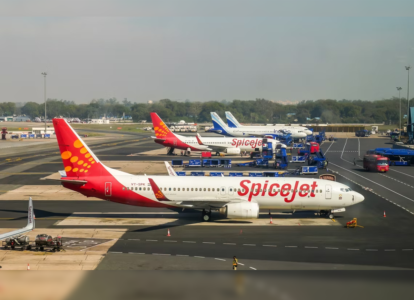
SpiceJet has been given permission to operate 2,240 flights each week, placing it in second place behind IndiGo. Air India completes the top three with 2,178 flights. AirAsia India will operate 1,456 weekly flights, while Go First has been given permission to operate 1,538 departures. This year’s summer schedule includes a few additional airports as well. According to a DGCA source quoted by The Times of India,
“… 22,907 departures per week have been finalized to/from 110 airports (for) summer schedule, compared to 21,941 departures per week from 106 airports in winter schedule 2022. Out of these 110 airports, Jeypore, Cooch Behar, Hollongi, Jamshedpur, Pakyong, Mopa (Goa) are the new airports proposed by the scheduled airlines.”
This is likely to be the final summer schedule for Vistara and AirAsia India, whose operations will soon be combined with those of Air India and Air India Express, respectively.
The decrease in weekly departures is partly a result of the capacity constraint experienced by airlines like IndiGo and Go First, who have 50 to 55 planes grounded as a result of a shortage of engines and spare parts brought on by a slow global supply chain.
In order to meet operating requirements, Go First had to use its active aircraft to the maximum extent permitted, while IndiGo had to extend the lease on some of its older Airbus A320ceo aircraft.
SpiceJet’s weekly departure numbers have decreased by more than 45% from last year. SpiceJet has always struggled with bad finances. It didn’t fully utilize it even during the winter timetable, which had 3,193 weekly departures. Yet, if it is able to complete the entire summer schedule, it may end up being the second-largest airline in terms of domestic market share.
The decline in flight numbers occurs at a time when passenger numbers are recovering dramatically and, on some days, even exceeding pre-COVID levels. But, because of the simple demand and supply equation, airlines can anticipate that their aircraft will be more fully occupied, and they may continue to turn a profit in the upcoming quarters, as they have in recent months.