The demand for air travel is expected to grow in 2023, and Philippine Airlines remains hopeful about a highly profitable 2023 after recording successful quarterly results for the first time in a number of years last year. Philippine Airlines anticipates a profitable year and anticipates placing a prospective order for additional widebodies in the coming months.
The flag carrier’s current widebody fleet consists of nine Boeing 777-300ERs, two A350-900s, and ten Airbus A330-300s. The airline had previously run six Airbus A350-900s, but when it filed for Chapter 11 protection in the midst of the pandemic, it was forced to curtail capacity due to financial difficulties.
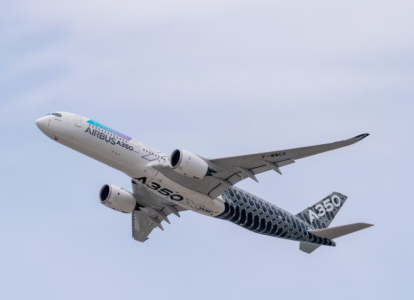
And Philippine Airlines is eager to reclaim the necessary capacity as it reviews its order book now that times are better. The airline is specifically thinking about switching from its existing flagship Airbus A350-900s to the larger A350-1000s.
Stanley Ng, the airline’s chief operating officer, stressed that while attention is focused on the Airbus A350-1000s, the exact number is still unknown because there are still other expenses for the company to address. Says Ng:
“The capital expenditure would probably almost double this year because of all the improvements we wish to invest in, including system upgrades and customer relationship management systems. We’ll also be reactivating seven parked aircraft by the end of this year, and taking delivery of 13 Airbus A321neos through 2026.”
This would not be the first time that Philippine Airlines had the Airbus A350-1000s in mind. The last time the airline had its sights set on the bigger plane was back in 2018, when Airbus made the larger variant available to replace the carrier’s Boeing 777s and to fulfill the airline’s unfulfilled order of Boeing 787-9s.
But, Philippine Airlines opted to leave the past be the past after emerging from Chapter 11 at the beginning of last year because it did not want to be bound by the antiquated, legacy-based airline business models. In order to break its dependence on a single source of revenue, the flag carrier seeks to divide its attention between creating new all-cargo markets.
This means that the airline has plenty of capacity for certain long-haul widebody acquisitions because some of its Boeing 777s are occasionally employed for cargo-only trips. The Airbus A350-1000s appear to be the ideal choice for Philippine Airlines because of their partial commonality and larger seating capacities for long-haul aircraft services.
If Philippine Airlines does acquire the Airbus A350-1000s soon, the plane is good enough for the company to operate to a number of additional long-haul destinations at full capacity. It will be interesting to see how many aircraft the airline will book because financial obligations always play a big part in aircraft orders. In any case, it’s encouraging to see Philippine Airlines gradually rebounding.