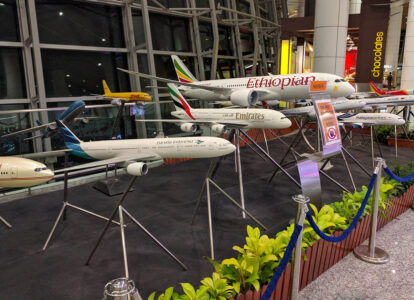
Nigeria owes approximately $700 million to foreign airlines, including Emirates and Ethiopian Airlines.
Nigeria has topped the list of nations withholding revenue earned by international airlines operating in the country, according to the International Air Transport Association (IATA).
The West African country is withholding $743 million in revenue, the most of any country. Nigeria is suffering from a severe foreign currency shortage, which limits imports and makes it difficult for investors to convert local currency and repatriate their funds.
According to IATA spokesperson Katherine Kaczynska, governments worldwide owed airlines $2.2 billion. Nigeria has the most blocked funds, owing $165 million, followed by Algeria, owing $146 million, and Lebanon, owing $146 million. In a statement, Kaczynska stated:
“Enabling the efficient repatriation of revenues is critical for any economy to remain globally connected to markets and supply chains.”
In December, IATA warned that the amount of airline funds blocked by governments for repatriation had increased by $394 million in the previous six months, a 25% increase at the time. The International Air Transport Association (IATA) has urged governments to remove all barriers to airlines repatriating revenue from ticket sales and other activities.
Aside from Nigeria’s $743 million debt, the IATA spokesperson stated that West African Economic and Monetary Union countries owed $132 million. Zimbabwe is also on the list, with severe foreign currency shortages and up to $80 million in frozen airline funds.
Emirates, the world’s largest Airbus A380 operator, suspended flights to Nigeria last year, citing an inability to repatriate funds from the West African country. The airline proposed a plan to release at least 80% of its funds, but failure forced it to halt operations in Nigeria because they were no longer commercially viable.
Emirates demanded $85 million in revenue after the Nigerian central bank released $265 million to international airlines to settle outstanding ticket sales. A few days later, the airline resumed flights to Nigeria. President Muhammadu Buhari directed the central bank last month to increase the amount of foreign currency allocated to the Dubai-based carrier.
There was also a disagreement between Ethiopian Airlines (ET) and the Nigerian government over airline funds that were trapped in the deal to relaunch Nigeria Air. As previously stated, ET will own 49% of the new airline, with the Nigerian government owning 5%.
On the sidelines of the African Union summit last month, Nigerian President Muhammadu Buhari met with Ethiopian Airlines Chairman Girma Wake in Addis Abeba. Girma Wake, the president’s Senior Special Assistant on Media and Publicity, requested that the airline’s funds held in Nigeria be returned.
Buhari told Wake that the government’s decision to relaunch the flag carrier was a significant one and that everything would be fine. The trapped funds pose a significant risk to Nigeria’s aviation industry because they can drive away investors.