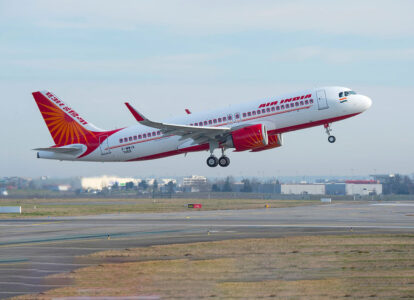
In order to keep up with the rapidly increasing demand for air travel, India, the world’s fastest-growing economy, announced plans on Monday to invest billions of dollars in airports, planes, and hiring.
More airports, more regulators and air traffic controllers, and new flight schools will all contribute to growth, the civil aviation minister Jyotiraditya Scindia told an assembly of businesspeople.
“We need to put in place the civil aviation infrastructure and capabilities that by 2047 would be able to support a $20 trillion economy within India,” Scindia told the CAPA India Aviation Summit in New Delhi.
The government of Prime Minister Narendra Modi announced this year that by 2025, the South Asian country would invest 980 billion rupees ($11.88 billion) to improve regional connectivity by building new airports and renovating existing ones.
Poor infrastructure is said to be impeding India’s aviation development, particularly as the nation attempts to connect its hinterlands to larger cities in an effort to increase air travel.
According to Scindia, the six main airports in the nation would be able to accommodate 420 million passengers in four years, up from 192 million at present, and the fleet of Indian airlines will increase from 700 to 2,000 planes in five years.
With manufacturers currently failing to keep up with aircraft demand and some planes being grounded due to engine shortages, airline traffic is swiftly recovering from the coronavirus restrictions that caused jets to be grounded globally in 2020.
India has modified its aircraft leasing program to include more “wet leasing,” or renting out aircraft with crew, for both domestic and foreign routes, to close the deficit.
Yet, it issued a warning that the highly cyclical sector could return to a surplus.
After Air India made a record purchase for 470 jets a few weeks ago, consultancy CAPA India anticipates at least 1,300 further orders from Indian airlines within the next two years.
The chief executive of the firm, Kapil Kaul, claimed that the fact that Indian airlines were operating at over 90% capacity even on typically quieter weekdays was “a symptom of shortages.”
A “severe shortage of skilled pilots, particularly for wide-bodies,” he continued, is another issue.