In a recent conversation with Jonathan Wood, the Vice President of Commercial and Technical Management in Neste's Renewable Aviation division, we gain insight into the company's involvement in scaling up Sustainable Aviation Fuel (SAF) production and its progress within the 'Journey to Zero' initiative.1. What is the role of SAF in decarbonizing aviation and what …
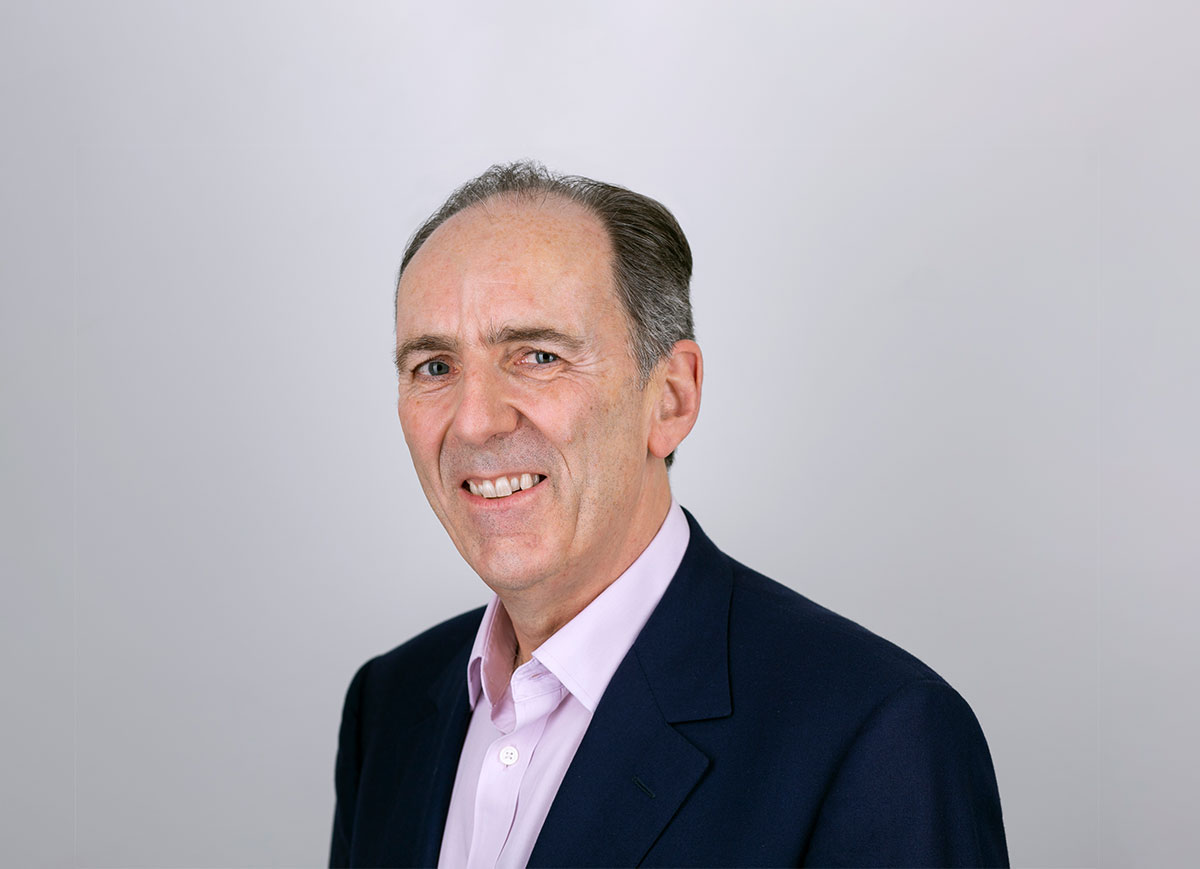
In a recent conversation with Jonathan Wood, the Vice President of Commercial and Technical Management in Neste’s Renewable Aviation division, we gain insight into the company’s involvement in scaling up Sustainable Aviation Fuel (SAF) production and its progress within the ‘Journey to Zero’ initiative.
1. What is the role of SAF in decarbonizing aviation and what is the status of this?
The aviation industry has committed to achieving net zero carbon emissions by 2050 and sustainable aviation fuel (SAF) is widely acknowledged as a key
element to helping aviation achieve this goal. Using SAF reduces greenhouse gas emissions by up to 80% over the fuel’s life cycle compared to using fossil jet fuel.
IATA estimates that SAF needs to deliver around 65% of the emission reductions needed to get to net zero by 2050. More and more airlines are committing to using SAF as part of their sustainability commitments, for example targeting 10% SAF usage by 2030. Current SAF use is less than 1% of total annual global jet fuel consumption. Neste expects the global SAF demand to reach 15 million tons/a by 2030.
2. How is the Neste aiming to ramp-up SAF production?
We believe the demand for renewable products is expected to grow substantially by 2030 and beyond, driven by higher climate ambitions and supportive

regulation. Neste is fully committed to supporting the aviation industry achieve the ambitious climate targets and is ramping up SAF production through the strategies of:
- Continued investment into new renewable products production capacity. Neste is the world’s leading producer of sustainable aviation fuel with a current production capability of 1 million tons per annum. This will grow to 1.5 million tons per annum in early 2024 and 2.2 million tons in 2026.
- Continued growth in renewable feedstock and production platform. Neste’s global renewable feedstock and production platform has been substantially strengthened through organic growth as well as investments and acquisitions in the last two years and Neste will continue to grow its platform globally. Neste expects the global waste and residue oils and fats availability to grow to over 40 million tons per annum by 2030.
- Continued innovation. Neste is innovating to bring new SAF production pathways to life; we are focusing on the following promising new feedstocks: lignocellulosic raw materials, municipal solid waste, algae, and power to liquid fuels (e-fuels).
3. One of your areas of emphasis is co-innovation with Neste. What recent strategic alliances or partnerships have been formed?

We are delivering on our promise to increase the availability of SAF. Currently Neste supplies SAF to over 70 customers across the globe, including most of the major airlines such as United, American, Delta, Air Canada, Air France-KLM, Lufthansa, British Airways/IAG, and to fuel distributors.
We also partner with companies who sell SAF-based emission reductions together with flights to corporates for business travel, and to freight forwarders for cargo shipments.
We have also partnered with aircraft and engine manufacturers such as Airbus, Boeing, GE Aerospace and Rolls Royce, to further develop the SAF standards so the aircraft built now can use neat or pure SAF in future.
We work closely with airports who can also encourage the increased use of SAF, including San Francisco International Airport, Los Angeles International Airport, London Heathrow and Amsterdam Airport Schiphol.
Neste is also working actively with other companies to develop new production technologies to unlock access to additional renewable raw materials, for example electrolyser technology to enable power -to- liquid production methods.
4. How is Neste making its presence felt in the MENA region?
MENA is an important region in the aviation world, with some of the largest airlines and hub airports. It is worth noting that some of the most important events relating to climate change are taking place this year in the UAE, with COP28 and the international aviation ICAO conference.
Neste is fully committed to helping the region progress on the sustainability agenda. We are introducing Neste’s sustainable aviation fuel to the MENA market by partnering with the leading airlines in the region. In January 2023, Emirates, the world’s largest international airline by destinations, operated its first milestone demonstration flight on a Boeing 777-300ER, powering one of its engines 100% with Neste’s Sustainable Aviation Fuel. The flight took off on 30 January from Dubai International Airport (DXB) flying for more than one hour over the Dubai coastline. It is the first demonstration flight in the Middle East and North Africa in which one of the aircraft engines was powered by 100% SAF. This demonstrates a huge leap forward towards a future where SAF can be safely used in its neat form.

5. Is SAF the only option? What are other alternatives you may be considering?
For the aviation industry, SAF is part of a broader package of measures also including operational efficiencies, engine development, and other propulsion technologies using hydrogen and electric power. Hydrogen aircraft technology must overcome significant challenges, and so are not expected to be commercially available before 2035; they also require completely new supply infrastructure. Electric aircraft are most likely to be applied for small and short haul aircraft. SAF in contrast can be applied for all types of aircraft today, with existing supply infrastructure, and we all agree that we need to progress the emission reduction agenda now and in this decade.
The SAF production pathways and raw materials used will evolve – in addition to using used cooking oil and animal fat waste as raw materials to produce SAF, there are a new generation of raw materials and technologies we are excited about, such as lignocellulosic raw materials, municipal solid waste, novel vegetable oils, algae, and power-to-liquid (e-fuels).
6. How is Neste’s ‘Journey to Zero’ progressing thus far? What is Neste’s goal in doing this?
Everything we do is guided by our purpose of creating a better planet for our children. Our aim is to be a global leader in renewable and circular solutions, and we are committed to:
- Supporting our customers to reduce their greenhouse gas (GHG) emissions by at least 20 million tons annually by 2030 and
- Reaching carbon neutral production by 2035.
We are well on track. In 2022, Neste’s renewable solutions helped customers reduce greenhouse gas emissions globally by 11.1 million tons and we are transitioning our last remaining fossil oil refinery in Porvoo, Finland to non-crude oil refining and into a globally leading renewable and circular solutions site.
7. What cutting-edge technologies have you introduced to the aviation market?
Bringing SAF to the market and disrupting fossil jet fuel’s monopoly is quite cutting-edge. We all know that air travel currently accounts for 2-3% of global emissions, but this number could grow to 20% by 2050 if action is not taken. SAF is the only viable solution today but also for the foreseeable future to reduce the greenhouse gas emissions from air travel.
8. What challenges are you facing in the MENA region and how are you addressing them?
Support on the policy side to provide long term market certainty for SAF demand and supply would help the aviation sector progress its sustainability agenda. If you look at other markets such as Europe or North America, mandates and incentives support demand and thus provide investment certainty, and assist with affordability.
All players in the aviation industry need to collaborate to increase the awareness of SAF, explain the benefits and make it easier to choose to fly with SAF. We all have a role to play whether you are an airline decarbonizing your operations, a corporation wanting to reduce the carbon footprint of business travel, an air cargo shipper who wants to decarbonise their supply chain, or a consumer travelling by air.
Author : Johnathan Wood, Vice President of Commercial and Technical Management in Neste’s Renewable Aviation division