The field of Advanced Aerial Mobility (AAM) and Unmanned Aircraft Systems (UAS) is expanding quickly due to notable developments in motor and battery technology. These upgrades are increasing the efficiency and sustainability of aerial vehicles in addition to their performance and capabilities. Here we explore how these two crucial areas are influencing aviation's future by …
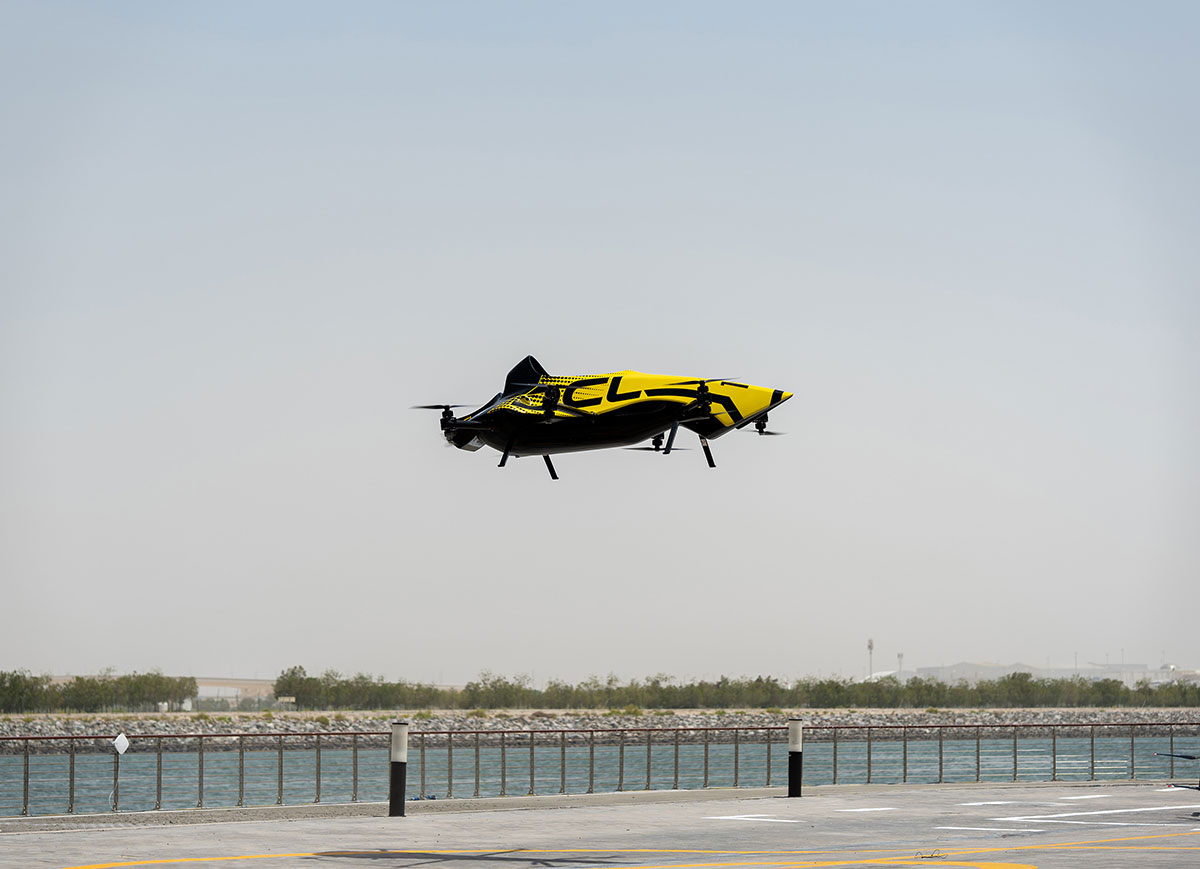
The field of Advanced Aerial Mobility (AAM) and Unmanned Aircraft Systems (UAS) is expanding quickly due to notable developments in motor and battery technology. These upgrades are increasing the efficiency and sustainability of aerial vehicles in addition to their performance and capabilities. Here we explore how these two crucial areas are influencing aviation’s future by examining recent advancements in them.

Development of UAS/AAM Motor Technology
UAS and AAM vehicles’ operational capabilities, dependability, and efficiency are largely determined by the motors they use. These motors have typically been built using induction motor or brushed DC technology. But the transition to brushless Direct Current (DC) motors has resulted in a notable advancement in UAS/AAM propulsion technologies. When it comes to precise maneuvering, which is essential for UAS and AAM operations, brushless DC motors outperform their brushed counterparts in terms of efficiency and reliability, low maintenance, and improved control.
Furthermore, the integration of cutting-edge motor technologies like Axial Flux Motors is expanding the bounds. Axial flux motors, in contrast to conventional radial flux motors, feature a flat, disc-like architecture that offers a higher power density and efficiency in a more lightweight and compact design. This is especially helpful for the AAM industry, where weight reduction is essential for both performance and energy efficiency. Moreover, axial flux motors are renowned for their superior thermal management—a noteworthy benefit considering the majority of aerial vehicles’ small stature and high power needs.
Using Ultra High Temperature Superconductor (UHTS) materials in motor construction is another cutting-edge strategy. At extremely high temperatures, UHTS materials can conduct current with almost no electrical resistance, greatly increasing the motors’ power density and efficiency. For UAS and AAM payload and range requirements, these materials allow for the design of lighter, smaller motors that can run at higher power levels.
Advancements in Battery Technology
Battery technology is yet another important factor propelling the UAS/AAM sector. The need for increased safety, longer flight times, and faster recharge times is driving the advancement of battery technology. Since lithium-ion batteries have such favorable energy-to-weight ratios, they have been the industry standard. But new developments in chemistry and technology are paving the way for even more potent power sources.
One of this field’s most promising developments is solid-state batteries. Higher energy densities, improved safety, and longer lifespans are provided by these batteries by substituting a solid electrolyte for the liquid or gel electrolyte. Compared to their lithium-ion counterparts, solid-state batteries are less likely to catch fire and perform better over a larger temperature range. This could result in longer flight durations and lower risks for UAS and AAM, which are essential for both commercial and civilian applications.
Exciting opportunities exist for exploring lithium-sulfur (Li-S) batteries in addition to lithium-ion and solid-state technologies. Theoretically, Li-S batteries could offer a much higher energy density, revolutionizing aerial vehicle range capabilities. Shorter lifecycles and stability problems are currently limiting Li-S battery applications, but research is addressing these issues and pointing to a future where Li-S batteries could revolutionize the UAS/AAM market.
Combining Innovations in Motor and Battery
Better motors and battery technologies are coming together to create UAS and AAM systems that are more durable, effective, and long-lasting. For example, because of their complementary features, axial flux motors and solid-state batteries can work together to improve performance in a synergistic way. By effectively converting solid-state batteries’ high-density energy into propulsion with minimal loss, axial flux motors maximize system efficiency.
Additionally, improvements in electronic speed controllers (ESCs), which control a motor’s speed and torque, are improving how well motors use battery outputs. By customizing control algorithms to the distinct characteristics of sophisticated battery systems, modern ESCs can maximize efficiency and prolong the operational life of both motors and batteries.
Prospects for the Future
It is imperative that motor and battery technology remain innovative in order to support the expanding UAS/AAM market. Research and development are moving toward even more revolutionary technologies as a result of the need for more economically and environmentally sustainable aerial vehicles. The next frontier in UAS/AAM technology includes wireless power transfer, hybrid propulsion systems, and graphene batteries.
Furthermore, regulatory agencies and groups that create standards are starting to adjust to these technological developments, creating new policies that guarantee security without impeding creativity. The potential for UAS and AAM to revolutionize a number of facets of daily life, from urban mobility and emergency services to transportation and logistics, is becoming more and more apparent as these technologies develop and integrate more smoothly.
In conclusion, the development of the UAS/AAM industry depends on the quick advances in motor and battery technology. In addition to resolving present issues, these technologies are creating new opportunities for the use of aerial systems by improving efficiency, safety, and operational capabilities.
Author: Shiyas Asif Ali, CEO, Leading Edge International