Al Ula International Airport in Saudi Arabia is about to operate with a virtual air traffic control tower, making it the first in the Middle East.
The new tower’s controllers won’t be in Al Ula, but rather in Jeddah, around 600 kilometers distant.
In Scandinavia, virtual or remote air traffic control towers are already prevalent. The technology that powers them was initially deployed at smaller regional airports, but it is now being introduced at bigger airports like Budapest and London City.
They essentially scan the area around an airport with radar and high-definition cameras, sending the data they gather to controllers at a distance so they can oversee landings and takeoffs.
The system brings cost-efficiency benefits, with fewer controllers being required for the safe operation of an airport.
The Saudi site is scheduled to be ready for certification in the third quarter of this year, with full operational status in early 2024.
The installation at Al Ula, in the north of Saudi Arabia, is being provided by Spanish company Indra, one of the main developers of remote air traffic management (ATM) technology.
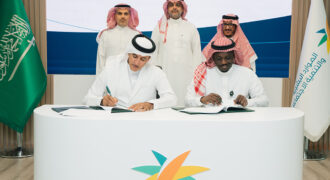
Indra signed a memorandum of agreement (MoA) with Saudi Air Navigation Services (SANS) in June 2022 to develop and operate the Al Ula site.
The two organisations will lead the introduction of the technology into a region with a large number of medium-sized airports that could benefit from its use.
The project will position the Saudi aviation sector in the vanguard of remote tower development and contribute to the goals set out in ‘vision 2030’, under which the country is diversifying its economy away from hydrocarbons.
Indra, which is one of the main providers of air traffic management (ATM) services in Saudi Arabia, is now incorporating the use of artificial intelligence to support the work of controllers and enable them to detect risk situations more rapidly and effectively.
Following the signing of last year’s agreement, SANS CEO, Abdulaziz bin Salem Al Zaid, said: “This project will constitute a qualitative leap for the navigation services provided by SANS and enhance its position as one of the operators that manages its airspace in accordance with the most demanding international safety and quality standards.”
Javier Ruano, Indra’s director of ATM operations, added: “We’re redoubling our efforts to make the Saudi service provider one of the world leaders in air traffic management and to equip the country with the most advanced infrastructure.”
The agreement also represented a first step in the two companies’ future collaboration plans in the field of virtual control towers, which would expand their current cooperation in the area of air traffic management systems, he said.
The project will include the training and skills enhancement of Saudi personnel, including the air traffic controllers, engineers, and technicians.
Indra has previously provided technical and operational training to controllers on how to use the ATM system and make the most of its capabilities for efficiency and safety maximisation. As a result of that, the SANS technical and operation team managed to commission and operate the Riyadh centre during Covid with remote support from Indra.
“This is the first project of many more that we hope we can deliver together in the future,” an Indra spokesman said. “SANS and Indra are establishing a joint venture to commercialise and deliver digital remote towers solutions and services to a segment of countries globally.
“The idea is to combine the technological capabilities and air traffic systems knowledge of Indra with the operational knowledge of SANS so that, together, we can provide an ‘end-to-end’ solution to our customers that covers not only the technological systems but also business advisory, operational training, and even tower control services in some cases.”
Indra also supplies ATM equipment throughout the region, with deployed systems in Oman, the UAE, Kuwait, Bahrain, Qatar and Jordan.