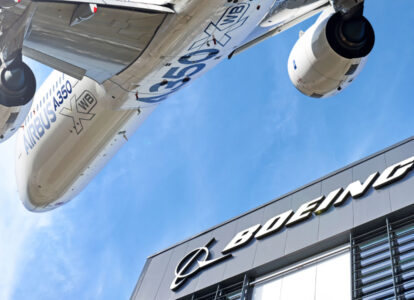
Boeing Co. forecasts that over the next 20 years, airlines will add 42,595 jets worth approximately $8 trillion, even as concerns about climate change influence how people travel.
According to Darren Hulst, a Vice President of Marketing at Boeing, the US aircraft manufacturer’s most recent estimate of global deliveries over the next 20 years takes into account rising activism around jet emissions. He forecasts a decline in commercial flights that are less than 500 miles in length as governments push people to use greener modes of transportation like trains.
Airlines’ ability to wring more flying and profit out of their aircraft will also temper sales. Boeing estimates that carriers will find ways to squeeze about 20 per cent more productivity out of their fleets by moving to large planes, adding denser seating patterns and keeping the airliners airborne more hours each day.
Still, Boeing expects the global fleet will nearly double through 2042, growing at a faster pace “- 3.5 per cent per year “- than its 2.6 per cent forecast for annual global economic growth. Airbus SE predicts that 40,850 new jets will enter the commercial market over that span.
Both planemakers expect single-aisle jets to dominate the market for the next two decades. Boeing sees the workhorse jets like its 737 Max and Airbus’s A320neo accounting for 76 per cent of projected sales, compared with a 80 per cent forecast by its European rival.
The Arlington, Virginia-based manufacturer doesn’t expect every category of jet to enjoy robust growth. Boeing reduced the numbers of air freighters and regional jets that it expected to enter the market by 1.6 per cent and 14.6 per cent, respectively, from last year’s forecast.
Hulst is skeptical that single-aisle jets capable of flying between continents, like rival Airbus SE’s A321XLR, will ever command more than a small niche of the market. The US planemaker doesn’t have an offering that directly competes with its rival’s long-range narrowbody.
“You run out of the capacity for bags. You run out of the ability to provide a premium product,” Hulst said. “The cargo element that is such a big part of medium- and long-haul is simply not an option.”