If the Air Force has to fight a major adversary such as China in years to come, a top general said, it must bring “mass” in its airpower — without breaking the bank.
But piloted fighters alone won’t be enough to maintain the United States’ prized air superiority, Lt. Gen. Richard Moore, deputy chief of staff for plans and programs, said in an interview with Defense News. Key aircraft in its fleet such as the F-15C are rapidly aging, and the service is on track to retire more than twice as many fighters as it buys over the next five years.
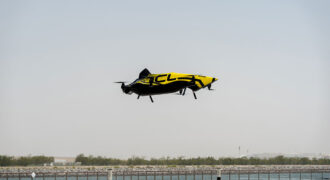
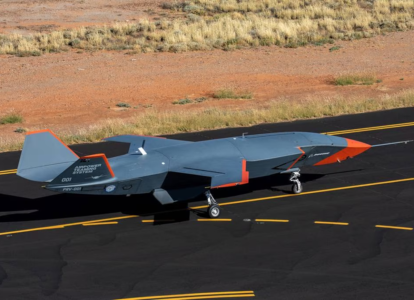
Moore said that in order to supplement its piloted fighter aircraft, the Air Force must construct and deploy a planned fleet of at least 1,000 drone wingmen. In order to figure out how to make this a reality, the service is attempting to bring together industry suggestions for so-called collaborative combat aircraft and its own tests.
“The picture here is changing, and what’s changing the picture is CCAs,” Moore said.
The Air Force is beginning to work out the specifics of how it would integrate drone wingmen into its fleet and employ them in a future conflict. Air Force Secretary Frank Kendall has made it clear that developing CCAs is one of his top objectives. Although the actual number may vary from that estimate, Kendall said in March that he gave the service’s planners the order to make the assumption that the Air Force will have 1,000 CCAs.
This spring, top Air Force officials heard from important politicians about their worries regarding the condition of the Air Force’s fighter fleet and its future plans for fighters.
Rep. Rob Wittman, R-Virginia, brought up the Air Force’s intentions to sell 801 fighters by 2028 while replacing them with 345 F-35s and F-15EXs during a hearing of the House Armed Services subcommittee on tactical air and land forces on March 29.
The majority of the F-15C and A-10 Warthog aircraft, as well as some older and less effective F-22s and F-16s, are scheduled for retirement, according to Moore at that hearing.
The F-15C and D Eagles of the Air Force are fast aging and becoming scarce, as demonstrated by their recent withdrawal from Kadena Air Base, Japan. The Next-Generation Air Dominance fighter systems that the service intends to use won’t be available until the end of the decade at the earliest, and they’ll be quite expensive, with each system projected to cost hundreds of millions of dollars. And even though the Air Force is still acquiring more F-35As, it has reduced the number of F-15EXs it was going to buy from 144 to just 104.
The chairman of the subcommittee, Wittman, expressed concern that continuing down this “glide slope” while major foes like China continue to invest in fighter aircraft could reduce America to the status of a “regional power.”
In order to supply the kind of airpower required to compete with a country with a military equivalent to the United States, according to Moore, CCAs will be essential.
However, Moore claimed that trying to achieve that level of airpower only with crewed jets would be too expensive, leading the Air Force to turn to drone wingmen.
“We have to come up with a way to create affordable mass, and that’s where CCAs came in, and that’s why the numbers are so high,” Moore said, referring to plans envisioning a 1,000-drone fleet. “You can’t just talk about F-35s, and F-15Es, and F-15EXs and F-16s, and call that the enterprise. You have to add CCAs in.”
And the service’s proposed budget for 2024 requests money to make that planning a reality. The service asked for nearly $50 million to start a program called Project Venom that aims to refine autonomous software of the kind that could fly CCAs, and $69 million to launch an Experimental Operations Unit where officials would start developing the tactics and procedures to incorporate CCAs into a squadron.